

Artificial intelligence (AI)-based heart health screening, cardiac functional assessment, and cardiovascular safety monitoring during exercise.
Your heart during exercise is not just about heart rate. Ordinary fitness trackers see only numbers — they don't understand whether your myocardium is getting enough oxygen, whether coronary perfusion is dropping, or whether your blood is thickening to dangerous levels. Ischemia, hypoxia, and thrombosis can develop asymptomatically within 10–15 minutes of intense exercise — by the time you feel discomfort, the clock may be counting down in minutes. We have broken down in detail exactly which 9 heart problems during sports the ACCO AI watches detect with measurements every 5 minutes, and why this turns your device from a heart rate monitor into a personal cardiologist on your wrist. Sport should bring health, not risk — read on to learn how to make heart monitoring truly smart.
POST TABLE OF CONTENTS
Examples of health metrics for the heart, microcirculation, and blood flow.
This example of health metrics shows the full depth of monitoring possible with ACCO devices. All parameters are available on the ACCO AI watches page.
BLOOD FLOW PARAMETERS
VEIN OXYGEN SATURATION (SVO2)
OXYGEN CONSUMPTION (VO2)
ARTERIAL OXYGEN TENSION (PAO2)
PULMONARY VASCULAR RESISTANCE (PVR
ARTERY BLOOD OXYGEN PRESSURE (OI)
ALVEOLAR VENTILATION (VA)
MICROCIRCULATION ASSESSMENT
MICROCIRCULATION HALF UPDATE RATE (MHR)
MICROCIRCULATION HALF UPDATE TIME (MRT)
SYSTEMIC BLOOD FLOW (QS)
MEAN RETENTION TIME OF MICROCIRCULATION (MST)
HEART FUNCTION METRICS
CORONARY PERFUSION PRESSURE (CCP)
RIGHT VENTRICULAR STROKE WORK (RVSW)
MYOCARDIAL PERFUSION (CMBV)
CARDIAC OUTPUT FORCE (CPO)
MYOCARDIAL BLOOD DEMAND (CMBN)
CARDIAC FUNCTION INDEX (CFI)
CARDIAC INDEX (CI)
LEFT VENTRICULAR STROKE WORK INDEX (LVWI)
MYOCARDIAL BLOOD SUPPLY AND CONSUMPTION RATE (CMBR)

Introduction: Why a Regular Heart Rate Monitor Is Not Enough for Your Heart.
Regular physical activity is the foundation of good health. However, the paradox of modern fitness is that for someone with undiagnosed heart problems, an intense workout can become not medicine but a trigger for serious complications — from a hypertensive crisis to sudden arrhythmia and myocardial infarction.
This is why assessing heart health during sports is not a statistical option but a matter of safety. Every runner, swimmer, or gym-goer needs an objective answer to the question: "What is happening to my heart right now under stress? Is it getting enough oxygen? Is it working itself to exhaustion?"
Modern fitness trackers and smartwatches have revolutionized self-monitoring. They can measure heart rate, count steps, estimate calories, and even record a simple ECG. Millions of people have grown accustomed to relying on the green LEDs on their wrist, tracking heart rate zones during cardio workouts.
But for quality monitoring of heart function during exercise, this is categorically insufficient.
Here are the main limitations of ordinary trackers:
First, they see only "quantity" but not "quality." Measuring heart rate does not show how the heart is contracting. A high pulse could be normal for a trained person or a sign of myocardial hypoxia for a beginner. Without analysis of ejection fraction, perfusion, and oxygen consumption, the heart rate number tells you almost nothing about heart health.
Second, they ignore myocardial metabolism. Ordinary watches do not know whether your heart is getting enough oxygen right now. Yet it is precisely the imbalance between demand and supply that leads to ischemia and heart attacks during a sprint or bench press.
Third, they do not see the "hidden dangers." Fibrinogen, blood viscosity, coronary perfusion pressure, microcirculation — these parameters are not tracked by standard devices. But their deviation under stress is a direct path to thrombosis or sudden cardiac death.
Fourth, they work post-factum, not proactively. Most trackers alert you to a problem after it has already happened (for example, they recorded bradycardia or tachycardia). They lack predictive ability — to say 10 minutes before a critical drop in perfusion or 5 minutes before a dangerous arrhythmia that you need to stop exercising.
Fifth, they do not integrate data into a long-term perspective. A single heart rate measurement today and another next month are just two numbers. Without machine learning that identifies trends (for example, that every third workout your oxygen saturation drops and fibrinogen rises), it is impossible to predict the risk of a cardiac event.
This is where a new generation of AI-powered watches, such as the ACCO AI Health Watch, comes to help. They do not just measure pulse — every 5 minutes they non-invasively assess dozens of cardiac parameters, from ejection fraction and coronary perfusion to blood viscosity and myocardial oxygen consumption. And the artificial intelligence not only assesses the current state but also predicts risks, forming personalized recommendations before the problem shows symptoms.
Below we detail exactly which heart problems during sports the ACCO AI can detect and why monitoring every 5 minutes can save your life.
Regular physical activity is the foundation of good health. However, the paradox of modern fitness is that for someone with undiagnosed heart problems, an intense workout can become not medicine but a trigger for serious complications — from a hypertensive crisis to sudden arrhythmia and myocardial infarction.
This is why assessing heart health during sports is not a statistical option but a matter of safety. Every runner, swimmer, or gym-goer needs an objective answer to the question: "What is happening to my heart right now under stress? Is it getting enough oxygen? Is it working itself to exhaustion?"
Modern fitness trackers and smartwatches have revolutionized self-monitoring. They can measure heart rate, count steps, estimate calories, and even record a simple ECG. Millions of people have grown accustomed to relying on the green LEDs on their wrist, tracking heart rate zones during cardio workouts.
But for quality monitoring of heart function during exercise, this is categorically insufficient.
Here are the main limitations of ordinary trackers:
First, they see only "quantity" but not "quality." Measuring heart rate does not show how the heart is contracting. A high pulse could be normal for a trained person or a sign of myocardial hypoxia for a beginner. Without analysis of ejection fraction, perfusion, and oxygen consumption, the heart rate number tells you almost nothing about heart health.
Second, they ignore myocardial metabolism. Ordinary watches do not know whether your heart is getting enough oxygen right now. Yet it is precisely the imbalance between demand and supply that leads to ischemia and heart attacks during a sprint or bench press.
Third, they do not see the "hidden dangers." Fibrinogen, blood viscosity, coronary perfusion pressure, microcirculation — these parameters are not tracked by standard devices. But their deviation under stress is a direct path to thrombosis or sudden cardiac death.
Fourth, they work post-factum, not proactively. Most trackers alert you to a problem after it has already happened (for example, they recorded bradycardia or tachycardia). They lack predictive ability — to say 10 minutes before a critical drop in perfusion or 5 minutes before a dangerous arrhythmia that you need to stop exercising.
Fifth, they do not integrate data into a long-term perspective. A single heart rate measurement today and another next month are just two numbers. Without machine learning that identifies trends (for example, that every third workout your oxygen saturation drops and fibrinogen rises), it is impossible to predict the risk of a cardiac event.
This is where a new generation of AI-powered watches, such as the ACCO AI Health Watch, comes to help. They do not just measure pulse — every 5 minutes they non-invasively assess dozens of cardiac parameters, from ejection fraction and coronary perfusion to blood viscosity and myocardial oxygen consumption. And the artificial intelligence not only assesses the current state but also predicts risks, forming personalized recommendations before the problem shows symptoms.
Below we detail exactly which heart problems during sports the ACCO AI can detect and why monitoring every 5 minutes can save your life.
Structure of Heart Health Data. Estimated Results: Implication - Evaluation - Suggestion.

HEALTH METRIC VALUE

ESTIMATED RESULTS
ESTIMATED RESULTS
Implication:
Myocardial blood perfusion means the actual blood
volume which perfuses through cardiac coronary artery
into myocardium within unit time.
Evaluation:
At an excessive exercise, myocardial blood perfusion can
increase for a short time.
Suggestion:
1. Under normal conditions, this index can fluctuate in a
certain degree for a short time. Suggestions: Continue the
dynamic monitoring.
2. Suggestions: Take a diet of low salt/fat in ordinary
time; more take fresh melons, fruits and vegetables; avoid
a tiredness; take a rational exercise; and visit a hospital in
time when necessary.
1. Coronary Artery Disease (CAD).
WHAT IS MEASURED AND HOW:
Every 5 minutes, the pulse wave sensor evaluates the Coronary Heart Disease Risk Index (CHD-RI) and Global Ejection Fraction (GEF). The AI analyzes whether enough blood is reaching the myocardium during exercise.
FOCUS ON PHYSICAL ACTIVITY:
During running, swimming, or strength training, the heart's need for oxygen increases sharply. If the coronary arteries are narrowed (atherosclerotic plaques), a mismatch occurs between demand and supply.
CONSEQUENCES:
Stable angina (burning chest pain radiating to the left arm or jaw). If the exercise continues — acute myocardial infarction. Chronic heart failure due to scar tissue changes.
DETECTION EXAMPLE:
A person is out for a jog. At the 12th minute, the watch records a sharp drop in Global Ejection Fraction (GEF) from 60% to 45% and a rise in CHD-RI. The AI issues a warning: "High risk of myocardial ischemia. Reduce your pace. ECG consultation recommended."
PREDICTIVE ASSESSMENT:
The AI predicts that if the current pace is maintained for another 20 minutes, the probability of an ischemic event will reach 78%.
2. Myocardial Hypoxia (Oxygen Starvation of the Heart Muscle).
WHAT IS MEASURED AND HOW:
Every 5 minutes — Myocardial Oxygen Consumption (HOV), arterial oxygen saturation (SaO₂), and arterial oxygen tension (PaO₂).
FOCUS ON PHYSICAL ACTIVITY:
During intense exercise, muscles "steal" oxygen from the heart. If SaO₂ drops below 90% and HOV remains high (the heart is working on credit), hypoxia develops.
CONSEQUENCES:
Atypical chest pain (not always burning — may be a feeling of shortness of breath). Heart rhythm disturbances (extrasystoles, atrial fibrillation). Reduced myocardial contractility → acute heart failure. Long-term — ventricular remodeling and cardiosclerosis.
DETECTION EXAMPLE:
Stationary bike. At the 20th minute, the watch shows SaO₂ = 88% (normal is 95–99%), and HOV has risen to 1.8 times the baseline level.
AI assessment: "High myocardial oxygen consumption with reduced saturation. Risk of hypoxic damage. Stop exercise until SaO₂ returns to >94%."
PERSPECTIVE::
The AI models that if you continue exercising for another 10 minutes, there is an 85% probability of developing an arrhythmia.
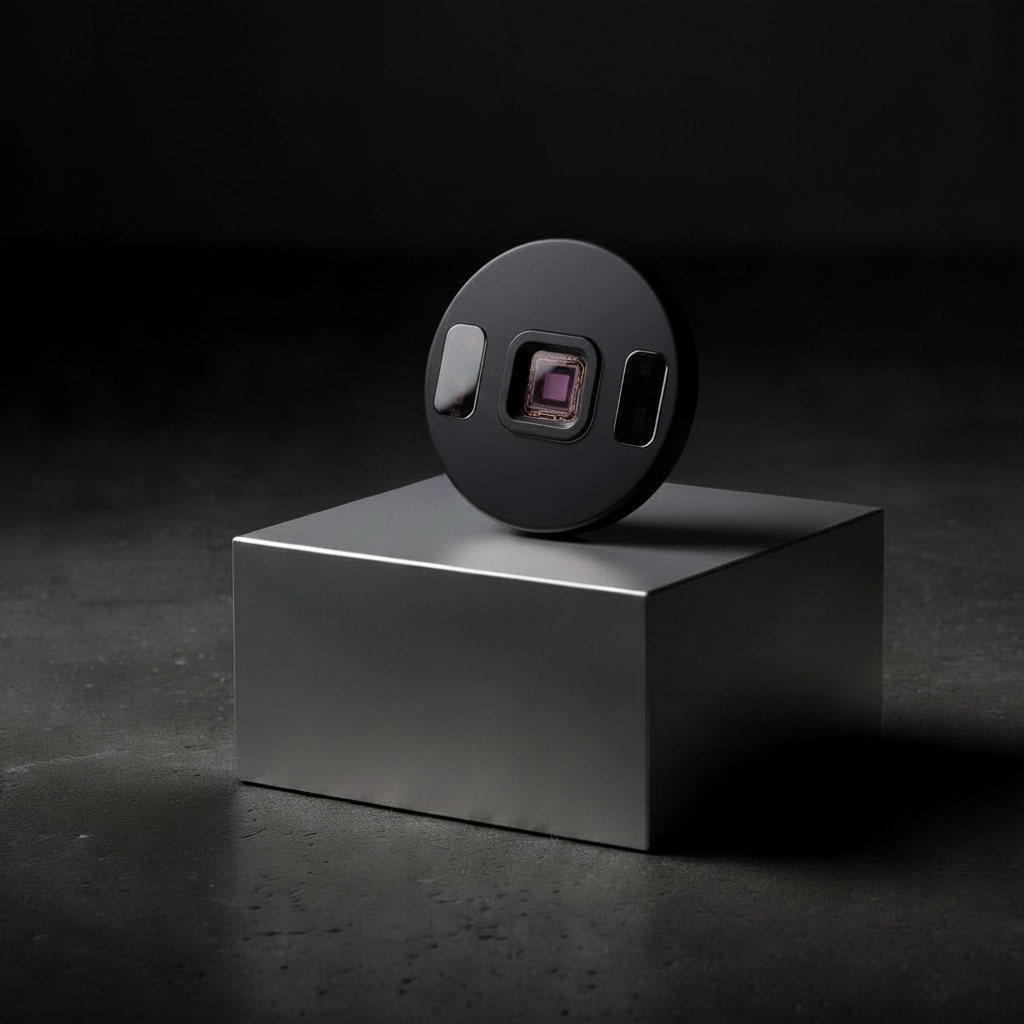
Pulse wave measurement sensor.
All of the devices in the product line read the pulse wave volume and thermal metabolism signals on the radial artery of the user's wrist. The data is then processed by the ARIA AI and displayed in the app.
A unique methodology for measuring health indicators developed by our team.
Safety of LED and optical sensor radiation for the user's health.
Using the devices only when measurements are needed, makes it even safer.
Highly accurate non-invasive glucose measurement to the nearest hundredth.
3. Heart Failure and Reduced Pumping Function.
WHAT IS MEASURED AND HOW:
Every 5 minutes — Cardiac Output (CO), Cardiac Power Output (CPO), Global Ejection Fraction (GEF), and ventricular work indices (LVWI, RVSW).
FOCUS ON PHYSICAL ACTIVITY:
In a healthy person, CO increases proportionally to the workload. In heart failure, CO either does not increase or falls. This is especially noticeable when transitioning from moderate to high intensity.
CONSEQUENCES:
Rapid fatigue and shortness of breath disproportionate to the training level. Orthostatic hypotension (dizziness when standing up after bending). Pulmonary congestion — wheezing in the lungs, cough. Progression of chronic heart failure with edema and hepatomegaly.
DETECTION EXAMPLE:
Seated dumbbell training. On the 8th set, the watch registers a drop in CO from 5.2 L/min to 3.8 L/min as heart rate increases. GEF drops from 55% to 42%.
AI assessment: "Heart pumping function is critically reduced under load. Stop the exercise. High risk of heart failure. See a cardiologist."
PERSPECTIVE::
The AI predicts that if this pattern repeats for 2 weeks, the probability of hospitalization for decompensated heart failure increases 4-fold.
4. Arrhythmia and Risk of Premature Contractions (Extrasystoles).
WHAT IS MEASURED AND HOW:
Analysis of pulse wave intervals every 5 minutes detects premature contractions, their frequency, and morphology (single, paired, grouped).
FOCUS ON PHYSICAL ACTIVITY:
During exercise, sympathetic tone increases and catecholamine levels rise. This can provoke ectopic foci of excitation. It is especially dangerous with electrolyte imbalances (sweating → loss of potassium and magnesium).
CONSEQUENCES:
Frequent extrasystoles (>10% of all beats) → reduced effective cardiac output. Paroxysmal tachycardia (sudden heart rate increase >150 bpm). Atrial fibrillation (risk of thromboembolism). Ventricular tachycardia or fibrillation — cardiac arrest.
DETECTION EXAMPLE:
Swimming in a pool. The watch records 6–8 consecutive extrasystoles every minute within a 5-minute window.
AI ASSESSMENT:
"Frequent grouped extrasystoles detected. Stop exercise immediately. Sit in a comfortable position. Seek help if chest pain or dizziness occurs."
PERSPECTIVE::
The AI analyzes the trend from 2 hours before exercise and shows that extrasystoles increase linearly after the 15th minute of any aerobic activity — it recommends limiting intensity to 60% of maximum heart rate.
5. Coronary Perfusion Disorders (Blood Supply to the Heart) .
WHAT IS MEASURED AND HOW:
Every 5 minutes — Coronary Perfusion Pressure (CCP) and Myocardial Perfusion (CMBV) through analysis of pulse wave shape and propagation time.
FOCUS ON PHYSICAL ACTIVITY:
During exercise, heart rate increases and the diastolic interval (when coronary arteries fill) shortens. If there is a stenosis (>50%), CMBV drops even with normal systemic blood pressure.
CONSEQUENCES:
Ischemia without pain (silent ischemia) — dangerous due to the absence of early warning signs. Post-ischemic dysfunction (myocardial stunning) that persists for hours after exercise. Increased risk of thrombosis in the hypoperfused area. Transmural infarction with prolonged ischemia.
DETECTION EXAMPLE:
Cross-country skiing. CCP drops from 100 to 55 mmHg (normal >80), CMBV falls by 40% from baseline, even though heart rate is only 130 bpm.
AI assessment: "Critical drop in coronary perfusion. The heart muscle is not getting enough blood. Stop immediately. Coronary artery evaluation required."
PERSPECTIVE::
The AI, knowing age, gender, and previous trends, warns: "Within 3 months, if this exercise pattern continues, the risk of myocardial infarction is 22%."
6. Thrombotic and Pre-thrombotic Conditions.
WHAT IS MEASURED AND HOW:
Every 5 minutes — whole blood viscosity and fibrinogen level (FIB). The blood's aggregation ability is assessed.
FOCUS ON PHYSICAL ACTIVITY:
Intense exercise causes dehydration (blood thickening), microvascular injury, and release of clotting factors. If baseline viscosity or FIB is already high, this can trigger thrombosis.
CONSEQUENCES:
Coronary artery thrombosis — heart attack. Pulmonary embolism (PE) — sudden shortness of breath, collapse. Stroke due to cerebral artery thrombosis. Deep vein thrombosis of the legs with subsequent PE.
DETECTION EXAMPLE:
Workout in hot weather without drinking water. After 30 minutes, blood viscosity has increased by 25%, FIB has risen from 3 g/L to 4.8 g/L (normal up to 4).
AI assessment: "Pre-thrombotic condition. Dehydration and high viscosity. Immediately drink 500 ml of water, stop exercising. Avoid intense movements for the next 2 hours."
PERSPECTIVE::
The AI notes that every time viscosity rises >15% above baseline, the risk of thrombosis over the next 24 hours increases 3-fold, and recommends preventive fluid intake and avoidance of caffeine and alcohol.

7. Microcirculation Disorders
WHAT IS MEASURED AND HOW:
Every 5 minutes, microcirculatory renewal is assessed (MHR, MRT, MST) — how quickly red blood cells pass through capillaries and deliver oxygen to tissues.
FOCUS ON PHYSICAL ACTIVITY:
During exercise, muscles require increased capillary blood flow. In diabetes, atherosclerosis, or hypertension, the microcirculation cannot adapt quickly enough. This manifests as early acidification and muscle weakness.
CONSEQUENCES:
Muscle cramps and rapid fatigue. Slow recovery between sets. With long-term impairment — microinfarcts in target organs. Progression of diabetic foot (trophic ulcers).
DETECTION EXAMPLE:
Functional circuit training. The watch shows MRT (microcirculation half-renewal time) has increased from 3 to 11 seconds after 10 squats.
AI assessment: "Critical slowing of microcirculation. Tissues are suffering from hypoxia. We recommend a 5-minute break and calf massage. Consult about your capillary health."
PERSPECTIVE::
The AI builds a forecast: with each episode of microcirculation impairment during exercise, the risk of developing trophic changes over 6 months is 34%.
8. Elevated Blood Pressure (Hypertension).
WHAT IS MEASURED AND HOW:
A cuffless tonometer (optical sensor) measures systolic and diastolic pressure every 5 minutes, as well as Central Venous Pressure (CVP).
FOCUS ON PHYSICAL ACTIVITY:
In a hypertensive person, blood pressure during exercise rises excessively: for example, systolic pressure may exceed 220 mmHg even during moderate walking. This directly damages blood vessels mechanically.
CONSEQUENCES:
Hypertensive crisis during exercise — headache, nausea, risk of stroke. Aortic dissection (with a sudden pressure spike). Early left ventricular remodeling (hypertrophy). Reduced vascular elasticity → increased afterload on the heart.
DETECTION EXAMPLE:
Weight training (bench press). On the third set, systolic pressure reaches 235 mmHg, diastolic pressure 115 mmHg. CVP = 16 mmHg (normal 2–8).
AI assessment: "Severe hypertensive reaction to exercise. Stop the exercise immediately. Risk of hypertensive crisis. Antihypertensive therapy adjustment needed before workouts."
PERSPECTIVE::
The AI predicts that after 2 weeks of such episodes, myocardial hypertrophy progresses 15% faster than in patients with controlled blood pressure.
9. High Myocardial Oxygen Consumption (Inefficient Heart Function).
WHAT IS MEASURED AND HOW:
Every 5 minutes — Myocardial Oxygen Consumption (HOV) and the supply/consumption ratio (CMBR). These are derived from heart rate, contractility, and wall tension.
FOCUS ON PHYSICAL ACTIVITY:
When the heart works inefficiently (for example, after a heart attack or with cardiomyopathy), oxygen consumption per unit of work is elevated. The heart "burns" a lot of oxygen but pumps out little blood.
CONSEQUENCES:
Early onset of the anaerobic threshold. Myocardial acidification → impaired relaxation (diastolic dysfunction). Increased risk of fatal arrhythmias due to metabolic stress. Prolonged heart rate recovery after exercise.
DETECTION EXAMPLE:
Treadmill running at 7 km/h. Heart rate = 145 bpm, but CMBR = 0.65 (normal >0.85 — supply exceeds consumption).
AI assessment: "The heart is working in oxygen debt mode. Efficiency is low. We recommend reducing the load to a level where heart rate is below 115 bpm and increasing warm-up duration."
PERSPECTIVE::
Based on 3 weeks of daily 5-minute measurements, the AI creates a predictive model: if you do not change your training regimen, diastolic heart failure will develop within 4 months.

Who Needs Additional Monitoring.
AI-powered watches with heart monitoring every 5 minutes are not a gadget for everyone. For a healthy young person with no risk factors who exercises at an amateur level, a regular heart rate monitor is sufficient. But there are categories of users for whom standard heart rate control is categorically insufficient, and missing the first signs of ischemia, hypoxia, or thrombosis could cost their health or even their life. Here is who needs additional load monitoring using AI watches.
PEOPLE WITH DIAGNOSED CARDIOVASCULAR DISEASES
This includes patients with coronary artery disease, prior myocardial infarction, angina, chronic heart failure, arterial hypertension, arrhythmias (including atrial fibrillation), and cardiomyopathies. For these people, every workout is a balance between benefit and risk. AI watches help them not exceed the safe load threshold by tracking ejection fraction, coronary perfusion, and myocardial oxygen consumption in real time.
PEOPLE WITH DIABETES, ESPECIALLY TYPE 2 DIABETES
Diabetes damages small vessels (microangiopathy), impairs microcirculation, increases blood viscosity and fibrinogen, and is often combined with undiagnosed myocardial ischemia. During physical activity, a diabetic person's risk of thrombosis, hypoglycemia, and hidden heart failure increases many times over. ACCO AI, in addition to cardiac parameters, tracks glucose non-invasively, making the watch an indispensable assistant for safe fitness with diabetes.
PEOPLE WITH OBESITY AND METABOLIC SYNDROME
Excess body weight places increased stress on the heart even at rest. During a workout, the myocardium of such users works at its limit, yet outwardly the person may just appear "out of breath." AI watches distinguish a normal physiological response from a pathological one — a drop in ejection fraction, an increase in oxygen consumption without an adequate increase in cardiac output, or a hypertensive response to moderate exercise.
PEOPLE OVER 40–45 YEARS OLD, ESPECIALLY MEN
With age, the risk of subclinical coronary atherosclerosis increases. Many people over 40 already have atherosclerotic plaques that show no symptoms at rest but become critical under stress, including physical exertion. Sudden cardiac death during running or in the gym is a tragedy that most often occurs precisely in this age group. AI monitoring every 5 minutes can be that early warning that saves a life.
PEOPLE WITH A FAMILY HISTORY OF EARLY CARDIOVASCULAR EVENTS
If your parents, siblings, or children had a heart attack or stroke before the age of 55–60, your own risk is genetically elevated. At the same time, your blood vessels may remain asymptomatic for a long time. AI watches help detect the first deviations — a rise in the CAD risk index, a drop in coronary perfusion, an increase in blood viscosity — before they become clinically apparent.
PROFESSIONAL ATHLETES AND ENTHUSIASTS OF HIGH-INTENSITY TRAINING
For this category, the heart works in extreme modes regularly, which increases the risk of myocarditis, hypertrophy, fibrosis, and arrhythmias. The paradox is that a trained heart can compensate for abnormalities for a long time and then suddenly "break." AI watches provide objective data on how the heart is handling the load in real time and help avoid overtraining and hidden myocardial damage.
PEOPLE WITH HYPERTENSION, ESPECIALLY UNCONTROLLED OR LABILE HYPERTENSION
During physical activity, a hypertensive person's blood pressure can spike to dangerous values (systolic >220–230 mmHg), creating a risk of hypertensive crisis, stroke, or aortic dissection. A standard blood pressure cuff cannot measure pressure during movement. The built-in cuffless tonometer in ACCO AI does this every 5 minutes, allowing the user to stop in time.
PEOPLE TAKING ANTICOAGULANTS OR ANTIPLATELET DRUGS (BLOOD THINNERS)
For them, it is especially important to monitor blood viscosity and fibrinogen levels, because even a small change in these parameters under load can lead either to thrombosis (if the drug's effect is insufficient) or to bleeding (if the drug is working too strongly). AI assessment every 5 minutes provides an objective guide for safe training.
PEOPLE RECOVERING AFTER COVID-19
Long COVID syndrome often includes myocarditis, endothelial dysfunction, increased blood viscosity, and autonomic disorders. Many people who have recovered from COVID-19 try to return to training, but their heart and blood vessels no longer work as they used to. AI watches help track whether the current load is safe and prevent complications such as myocarditis or thrombosis.
ELDERLY PEOPLE (OVER 60–65 YEARS OLD) WHO REMAIN PHYSICALLY ACTIVE
With age, vascular elasticity decreases, microcirculation worsens, and coronary reserve declines. At the same time, many elderly people continue to garden, walk, play golf, or tennis. For them, heart monitoring during activity is not about improving performance but about preventing falls, fainting, hypertensive crises, and heart attacks.
PARENTS WHO WANT TO MONITOR THE HEALTH OF THEIR YOUNG ATHLETES
A child's heart can also malfunction, especially during intense training in sports clubs and competitions. Congenital defects, myocarditis, and arrhythmias sometimes remain hidden. AI watches with a child mode (ages 5 to 17) allow parents to track their child's heart rate, oxygen saturation, blood pressure, and overall condition in real time, receive SOS alerts, and feel at ease about their child's safety during practice.
BRIEF SUMMARY
If you fall into at least one of the categories listed above, relying only on heart rate is a gamble. Your heart may be sending distress signals that are invisible to the green LED of a fitness bracelet. ACCO AI watches with measurements every 5 minutes and predictive analytics turn your workout from a zone of risk into a zone of safety. Exercise should be medicine, not a threat — especially for those who are already in a high-risk group.
What the Tracker Will Warn You About and When.
IIF THE TRACKER SAYS:
IT MEANS:
YOUR ACTION:
"DRINK SOME WATER"
BLOOD VISCOSITY IS RISING
DRINK 300–500 ML OF WATER
TAKE A PAUSE"
EJECTION FRACTION HAS DROPPED
REST FOR 3–5 MINUTES
"SLOW DOWN"
SIGNS OF ISCHEMIA
REDUCE INTENSITY BY 30–40%
"STOP IMMEDIATELY"
DANGEROUS ARRHYTHMIA
SIT DOWN & CALL FOR HELP
"STOP"
BLOOD PRESSURE ABOVE 220/115
STOP EXERCISE, REST
"BREATHE DEEPER"
OXYGEN SATURATION < 92–93%
TAKE DEEP BREATHS, REDUCE PACE
"CHANGE YOUR TYPE OF EXERCISE"
LOW HEART EFFICIENCY
SWITCH TO WALKING
"STRETCH OR MASSAGE"
SLOWING OF MICROCIRCULATION
MASSAGE, WARM YOURSELF UP
"STOP EXERCISING"
HIGH RISK OF THROMBOSIS
DRINK WATER, AVOID SUDDEN MOVEMENTS
"IT IS TIME TO FINISH"
SEVERE FATIGUE
COMPLETE REST
"EAT SOMETHING SWEET"
DROP IN GLUCOSE
FAST-ACTING CARBOHYDRATES
"REDUCE INTENSITY"
HEART RATE ABOVE 90% OF MAXIMUM
MOVE INTO THE GREEN ZONE
"CONSULTATION NEEDED"
INADEQUATE HEART RATE RESPONSE
MAKE A DOCTOR'S APPOINTMENT
"CALL FOR HELP""
CRITICAL CONDITION
DIAL 911
What You Need to Understand About "Every 5 Minutes".
The reason the 5-minute measurement interval is critical is as follows. For pulse wave measurement, 5 minutes is enough time to detect a trend — such as falling perfusion — before symptoms appear. For oxygen saturation monitoring, a drop from 98% to 88% typically occurs over 3 to 5 minutes, meaning the watch can warn you 1 to 2 minutes before critical hypoxia sets in. For extrasystole analysis, 5 minutes is sufficient to distinguish between isolated extrasystoles and a dangerous paroxysm of tachycardia. For blood viscosity, dehydration stresses the heart; within 5 minutes, the AI can assess the rate at which viscosity is increasing and tell you to drink water.
The predictive assessment of the AI means that the watch does not simply say "things are bad right now." Instead, it compares current data with your own health history — trends over weeks or months. It calculates the probability of an event (heart attack, arrhythmia, crisis) occurring in the coming hours or days. And it provides personalized recommendations regarding exercise intensity, fluid intake, rest, and the urgency of seeing a doctor.
Thus, the ACCO AI Health Watch acts as an early warning system for the heart during sports, operating in real time with a frequency of 12 measurements per hour.

Conclusions and Summary.
Physical activity is the foundation of health, but for someone with undiagnosed heart problems, an intense workout can become not medicine but a trigger for serious complications — from hypertensive crisis to heart attack or sudden arrhythmia. This is precisely why assessing heart health during sports requires going beyond simple pulse measurement. Modern fitness trackers, which most of us wear on our wrists, can count steps, calories, and heart rate, but for quality monitoring of heart function under stress, this is catastrophically insufficient. They do not see whether the myocardium is getting enough oxygen, they do not assess coronary perfusion, they do not notice rising blood viscosity, and they cannot predict ischemia or thrombosis before the first symptoms appear. In other words, ordinary watches report a problem after the fact, when the clock is already counting down in minutes.
This is where a new generation of AI-powered watches, such as the ACCO AI Health Watch, takes a fundamental step forward. Unlike ordinary trackers, they non-invasively measure not one but more than three hundred health parameters every five minutes. In the context of heart problems during sports, devices of this type can detect nine key conditions. First, coronary artery disease, where analysis of the CAD risk index and ejection fraction can detect a critical reduction in myocardial blood supply before pain appears. Second, myocardial hypoxia, where dropping oxygen saturation and rising cardiac oxygen consumption signal the beginning of oxygen starvation. Third, developing heart failure, which shows itself as reduced cardiac output and contractile force under load. Fourth, arrhythmia and extrasystoles, which during a workout can degenerate into ventricular fibrillation. Fifth, coronary perfusion disorders, where even with a normal pulse, the pressure in the vessels feeding the heart drops to dangerous levels. Sixth, thrombotic conditions, where high blood viscosity and elevated fibrinogen create a real risk of heart attack or pulmonary embolism right during exercise. Seventh, microcirculation disorders, leading to rapid fatigue and cramps. Eighth, an excessive hypertensive response to exercise, where blood pressure spikes to crisis levels. And ninth, inefficient heart function, where the myocardium consumes critically large amounts of oxygen but pumps out too little blood.
The key advantage of such devices is not just the measurement frequency of every five minutes but the AI's ability to assess the situation prospectively. The watch does not simply state "things are bad now" — it predicts: "If you continue at the same pace for another ten minutes, the probability of ischemia or arrhythmia will reach 85 percent." This transforms the gadget from a passive recorder into an active assistant that can recommend reducing pace, taking a break, drinking water, or stopping the workout entirely and consulting a doctor.
To summarize: if you exercise regularly and have at least one risk factor — age over forty, excess weight, hypertension, diabetes, smoking, or a family history of heart disease — monitoring pulse alone is not enough. Ischemia, hypoxia, and falling perfusion can develop asymptomatically over ten to fifteen minutes of intense exercise. By the time you feel pain or dizziness, it may already be too late. Artificial intelligence technologies combined with non-invasive 5-minute monitoring of dozens of cardiac parameters transform a smartwatch into a personal cardiologist on your wrist — one that not only detects a problem but predicts it several minutes before it becomes threatening. Sport should bring health, not risk — and proper monitoring is the first and most important step toward safety.


Keep reading our blog


© 2026. All rights reserved.
COOKIE USE
By using our website, you consent to the processing of cookies and user data. If you do not want your data to be processed, please leave the site.