

🫀 AI Watches Reveal Your Slippery Pulse.
Subtitle:
How artificial intelligence turns an ancient diagnostic pattern into precise numbers and personalized recommendations.
Reading time: 6 minutes

What Is Slippery Pulse? 🤔
Slippery pulse is a diagnostic pattern from traditional Chinese medicine (TCM). A practitioner feels it as a smooth, gliding pulse under the fingers, like a drop of oil or a wet fish. 🐟💧
In TCM, it indicates an excess of "dampness" and "phlegm" in the body.
But what does this mean in modern medical language? 🩺
Traditional Interpretation
Modern Interpretation
Excess dampness
Edema, fluid retention, hypervolemia
Excess phlegm
Obesity, dyslipidemia, high cholesterol
Stagnation
Slowed microcirculation, hyperviscosity of blood
Metabolic disorder
Metabolic syndrome, insulin resistance, prediabetes
Metabolic disorder
Metabolic syndrome, insulin resistance, prediabetes
Slippery pulse is not a diagnosis — it is an early indicator. It can appear years before diabetes, hypertension, or cardiovascular disease develop.
How Do AI Watches See What Fingers Cannot Feel? 🔍
ACCO AI Health Watch does not mimic palpation. Instead, it measures objective physiological parameters that together form the slippery pulse pattern.
📊 Measurements happen every 5 minutes — no needles, no tubes, just from your wrist.
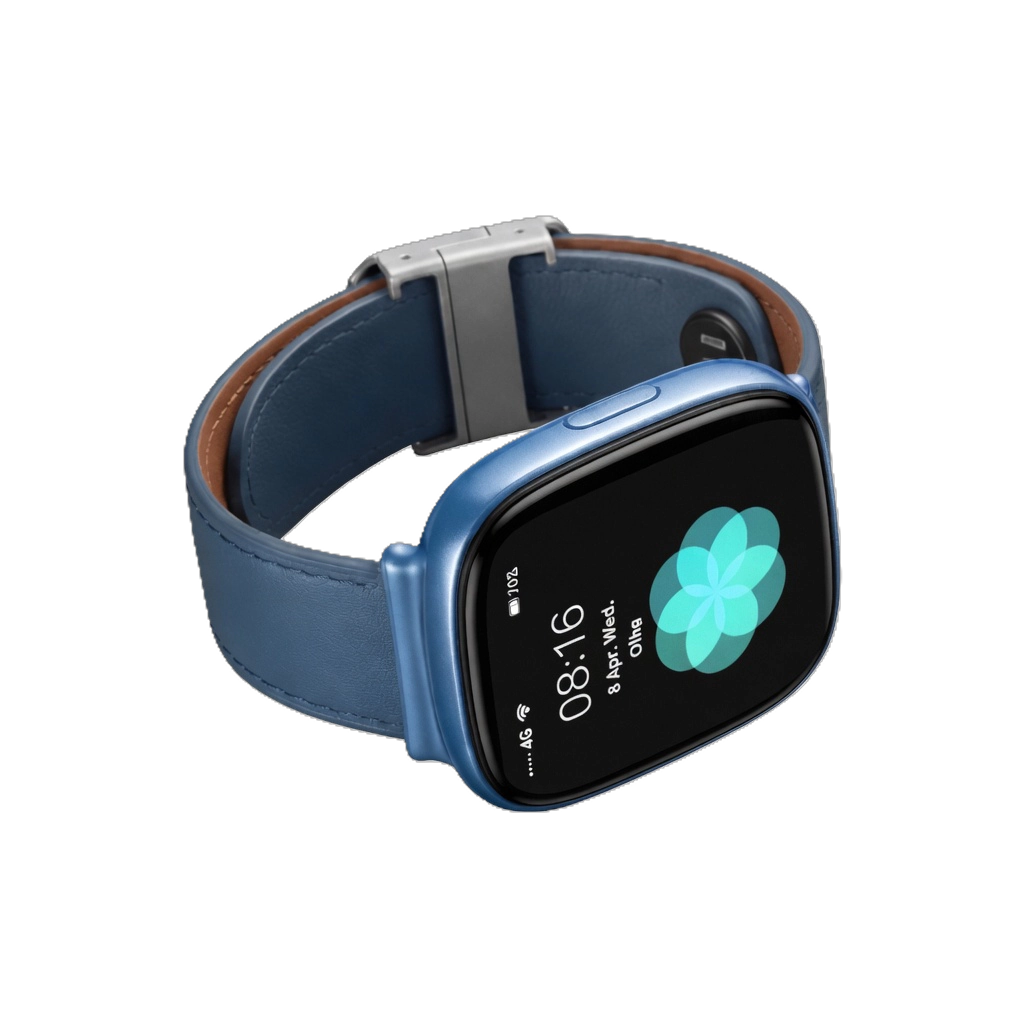
9 Groups of Parameters That Reveal Your Slippery Pulse 📋
1. 🩸 Blood: Viscosity and Coagulation.
Parameter
What It Measures
Connection to Slippery Pulse
Whole blood viscosity
Thickness of blood
↑ increased → thick, "sticky" blood
Fibrinogen (FIB)
Clotting protein
↑ increased → chronic inflammation
Hematocrit
Volume of red blood cells
↑ increased → blood thickening
Blood pH
Acid-base balance
↓ decreased → metabolic acidosis
What AI says when there is deviation:
"Blood viscosity and fibrinogen are increased. This corresponds to the slippery pulse pattern. Risk of thrombosis and chronic inflammation."
2. 🔥 Metabolism and Insulin Resistance.
Parameter
What It Measures
Connection to Slippery Pulse
HOMA-IR
Insulin resistance
↑ >2.5 → metabolic syndrome
HOMA-B
Beta-cell function
↑ or ↓ → carbohydrate metabolism disorder
Lactate (Lac)
Lactic acid
↑ increased → tissue hypoxia
TyG index
Triglyceride-glucose index
↑ increased → insulin resistance
LAP index
Lipid accumulation product
↑ increased → visceral obesity
UHR index
Uric acid / HDL ratio
↑ increased → inflammation, gout risk
VAI
Visceral adiposity index
↑ increased → obesity, "dampness" stagnation
What AI says when there is deviation:
"HOMA-IR and TyG index are elevated. Insulin resistance is a key manifestation of the slippery pulse pattern. Carbohydrate control and endocrinologist consultation recommended."
3. 🌊 Microcirculation and Blood Flow.
Parameter
What It Measures
Connection to Slippery Pulse
MHR
Microcirculation half renewal rate
↓ slowed → stagnation
MRT
Microcirculation half renewal time
↑ increased → slowed blood flow
MST
Mean retention time of microcirculation
↑ increased → capillary stagnation
Systemic blood flow (QS)
Systemic blood flow
↓ decreased → hypodynamic circulation
Cerebral blood flow (CBF)
Brain blood flow
↓ decreased → brain hypoxia
Brain hypoxia
Oxygen deficiency in brain
↑ risk → cognitive impairment
What AI says when there is deviation:
"Microcirculation is slowed (MRT above normal). Blood stagnates in capillaries — a direct manifestation of 'dampness' and 'stagnation'. Physical activity and hydration control recommended."
4. ❤️ Heart and Blood Vessels
Parameter
What It Measures
Connection to Slippery Pulse
Cardiac output (CO)
Volume of blood pumped by the heart
↓ decreased → heart failure
Global Ejection Fraction (GEF)
Pumping efficiency of the heart
↓ decreased → reduced pumping function
Central venous pressure (CVP)
Pressure in the central veins
↑ increased → blood stagnation
Blood pressure
Arterial pressure
↑ increased → hypertension
What AI says when there is deviation:
"Central venous pressure is elevated. This indicates blood stagnation — one of the key elements of the slippery pulse pattern. Blood pressure monitoring and ruling out heart failure recommended."
5. 🫁 Lungs and Breathing
Parameter
What It Measures
Connection to Slippery Pulse
Respiratory Quotient (RQ)
Ratio of CO₂ produced to O₂ consumed
↑ >1.0 → excess carbohydrates, obesity
Alveolar ventilation (VA)
Air reaching the alveoli
↓ decreased → hypoventilation
Minute ventilation (VE)
Total air per minute
↓ decreased → shallow breathing
Tidal Volume (VT)
Volume of one breath
↓ decreased → shallow breathing
PaCO₂
Carbon dioxide in arterial blood
↑ increased → hypoventilation
VO₂
Oxygen consumption
↓ decreased → reduced metabolism
What AI says when there is deviation:
"Alveolar ventilation is decreased. Shallow breathing is characteristic of obesity and Pickwick syndrome — an extreme manifestation of 'phlegm'. Weight loss and pulmonologist consultation recommended."
6. 🍔 Liver and Fat Metabolism
Parameter
What It Measures
Connection to Slippery Pulse
ALT, AST
Liver enzymes
↑ increased → liver damage
AST/ALT ratio
Ratio of liver enzymes
>2 or <0.8 → pathology
NAFLD
Non-alcoholic fatty liver disease
✅ risk → "dampness" and "phlegm" in the liver
Steatosis
Fatty liver
✅ present → fatty infiltration
What AI says when there is deviation:
"Signs of non-alcoholic fatty liver disease detected. This is a direct manifestation of 'phlegm' and 'dampness' in Chinese medicine. Low-sugar diet and gastroenterologist consultation recommended."
7. 🩺 Kidneys and Fluid Excretion
Parameter
What It Measures
Connection to Slippery Pulse
Uric acid (UA)
Uric acid level
↑ increased → hyperuricemia, gout risk
Serum creatinine (SCr)
Creatinine level
↑ increased → kidney dysfunction
Renal filtration fraction (GFF)
Filtration function of kidneys
↓ decreased → stagnation, impaired excretion
What AI says when there is deviation:
"Uric acid is elevated. Hyperuricemia is often combined with metabolic syndrome and is one of the manifestations of the slippery pulse pattern. Purine control in diet recommended."
8. ⚖️ Body Composition and Nutrition
Parameter
What It Measures
Connection to Slippery Pulse
BMI
Body mass index
↑ >25–30 → overweight, obesity
Fat percentage
Percentage of body fat
↑ increased → obesity
Obese mass
Mass of fat tissue
↑ increased → "dampness"
Caloric balance
Calories in vs. calories out
Positive → weight gain
Carbs, fats intake
Carbohydrate and fat consumption
↑ excess → formation of slippery pulse
What AI says when there is deviation:
"BMI is 32, body fat percentage is elevated. Obesity is the main physical manifestation of 'phlegm'. A 15–20% calorie deficit and increased physical activity recommended."
9. 😓 Stress and Fatigue
Parameter
What It Measures
Connection to Slippery Pulse
Fatigue level
Level of tiredness
↑ high → chronic fatigue
Stress level
Level of stress
↑ high → cortisol → obesity
Sleep quality
Quality of sleep
↓ low → impaired recovery
What AI says when there is deviation:
"High levels of fatigue and stress. Chronic stress contributes to the accumulation of 'dampness' and 'phlegm'. Relaxation techniques and sleep normalization recommended."
How AI Integrates All Parameters: A Comprehensive Output Example 🧠
When multiple parameters deviate simultaneously, AI generates a holistic pattern.
Example:
Group
Deviations
Blood
Viscosity ↑, fibrinogen ↑
Metabolism
HOMA-IR ↑, TyG ↑, LAP ↑
Body composition
BMI ↑, fat % ↑
Liver
NAFLD risk
Lungs
VA ↓, VT ↓
AI Final Output:
Implication:
"Increased blood viscosity, fibrinogen, HOMA-IR, TyG index, body mass index, decreased microcirculation (MRT increased) and alveolar ventilation detected. Together, these parameters correspond to the diagnostic pattern known as slippery pulse."
Evaluation:
"This condition is characteristic of metabolic syndrome, insulin resistance, visceral obesity, blood hyperviscosity, and chronic inflammation. Risk of non-alcoholic fatty liver disease, hypertension, type 2 diabetes, and thrombotic complications is elevated."
Suggestion:
"Reduce intake of simple carbohydrates and saturated fats. Increase physical activity (minimum 150 minutes per week). Monitor glucose and lipid levels. Consult a general practitioner and endocrinologist. Continue daily monitoring of blood viscosity, HOMA-IR, and microcirculation."
What to Do If AI Shows Slippery Pulse ✅
Step
Action
1️⃣
Do not panic. Slippery pulse is not a disease — it is an early indicator.
2️⃣
Check key parameters: blood viscosity, HOMA-IR, BMI, uric acid.
3️⃣
Adjust diet: less sugar, less refined flour, less saturated fats.
4️⃣
| Increase physical activity: walking, swimming, cycling. |
5️⃣
| Control hydration: 1.5–2 liters of water per day. |
6️⃣
| See a doctor to confirm possible conditions: metabolic syndrome, prediabetes, hypertension. |
7️⃣
| Continue daily monitoring with AI watches. |
The Bottom Line 🧠
Slippery pulse is an ancient diagnostic pattern that can now be objectively measured with AI watches.
ACCO AI Health Watch does not guess. It measures 20+ objective parameters: blood viscosity, HOMA-IR, microcirculation, body composition, lung function, liver function, kidney function.
Artificial intelligence combines this data into a single pattern and provides:
✅ Implication — what it means
✅ Evaluation — what caused it
✅ Suggestion — what to do
You do not get a mysterious "slippery pulse." You get clear numbers and concrete steps toward better health.


Keep reading our blog


© 2026. All rights reserved.
COOKIE USE
By using our website, you consent to the processing of cookies and user data. If you do not want your data to be processed, please leave the site.