

Artificial Intelligence (AI) health monitoring platform. Industry-specific AI solutions and Digital health twins.
Accofrisk AI Health - creates digital twins, assesses physical and mental conditions, provides personalized health recommendations, prevents burnout. The AI monitors 300+ metrics, including brain, heart, lungs, liver, sleep, and emotional health. It integrates with corporate and medical platfor, supports telemedicine, IoB, and generates actionable reports to enhance well-being and productivity. Bring real telemedicine into your clinical practice and corporate wellness programs today.


Employee digital twin — our vision of the future.
We are talking about the vision of the future, but we don’t know everything yet. We cannot assert that if 100% of employees create their digital twins, the company’s value will increase by 1.5 times — but there is plenty of potential for such growth.
PARTNERSHIP IN HEALTH
We see employee health as a true partnership: the company creates conditions to maintain well-being, and employees receive timely insights and guidance to stay safe, productive, and energized.
HEALTH-AWARE MANAGEMENT
We make management decisions more informed: task allocation, shift planning, schedules, and breaks are now guided by the real-time condition of employees, improving efficiency and adaptability.
HEALTH — A COMPANY ASSET
With digital health monitoring, physical and mental states become actionable. Companies can measure and manage resilience, productivity, planning, and risk, turning health data into strategic insights that guide every decision.

AI PLATFORM FEATURES
Digital health profile of an employee or patient.
CONNECTION
Unlimited employee access to the web interface.
Up to 20 users connected to the manager’s tablet.
PROFILE DATA STRUCTURE
Employee full name
Phone number
Reminder content
Measurement time
Comments
History and reports
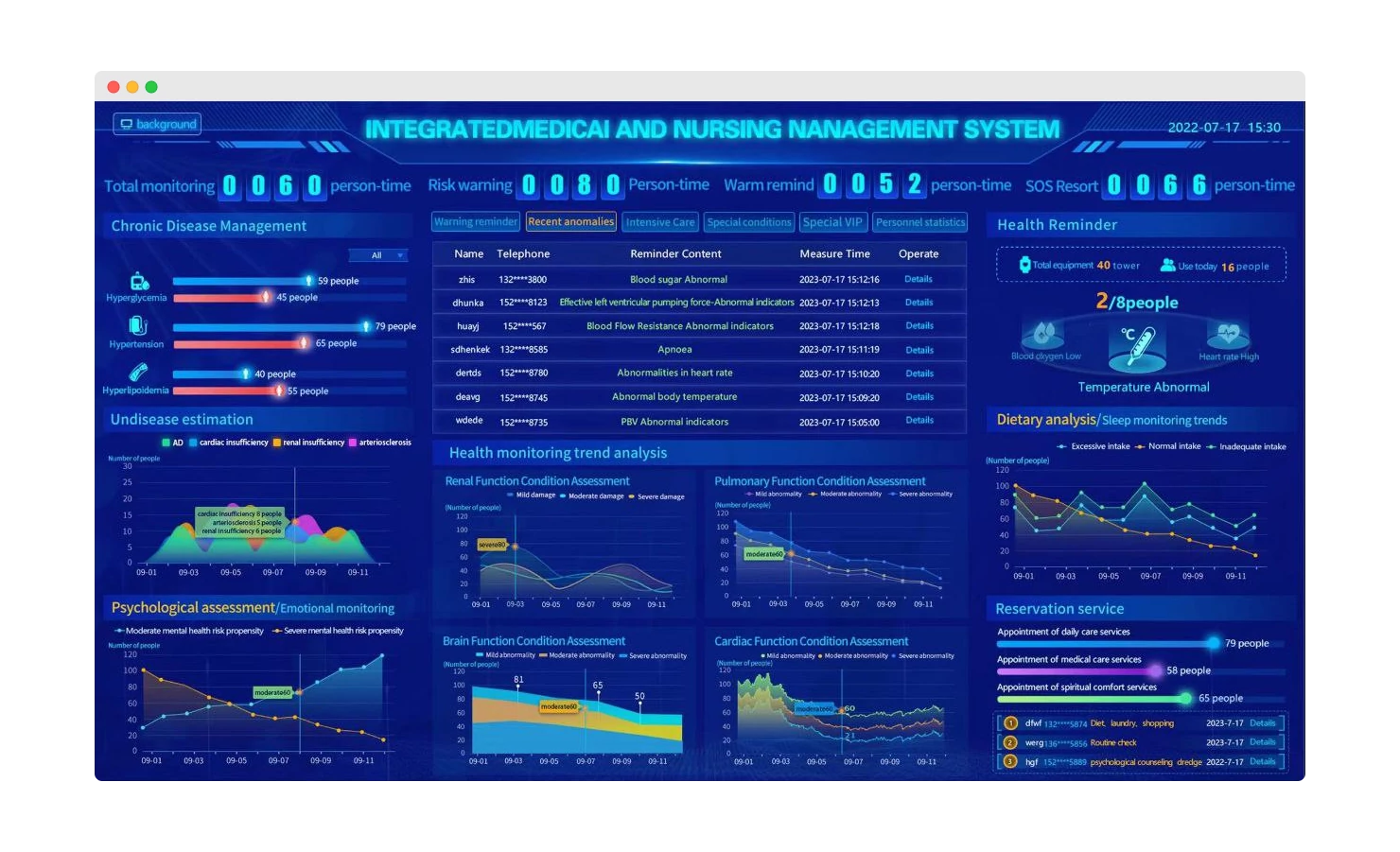
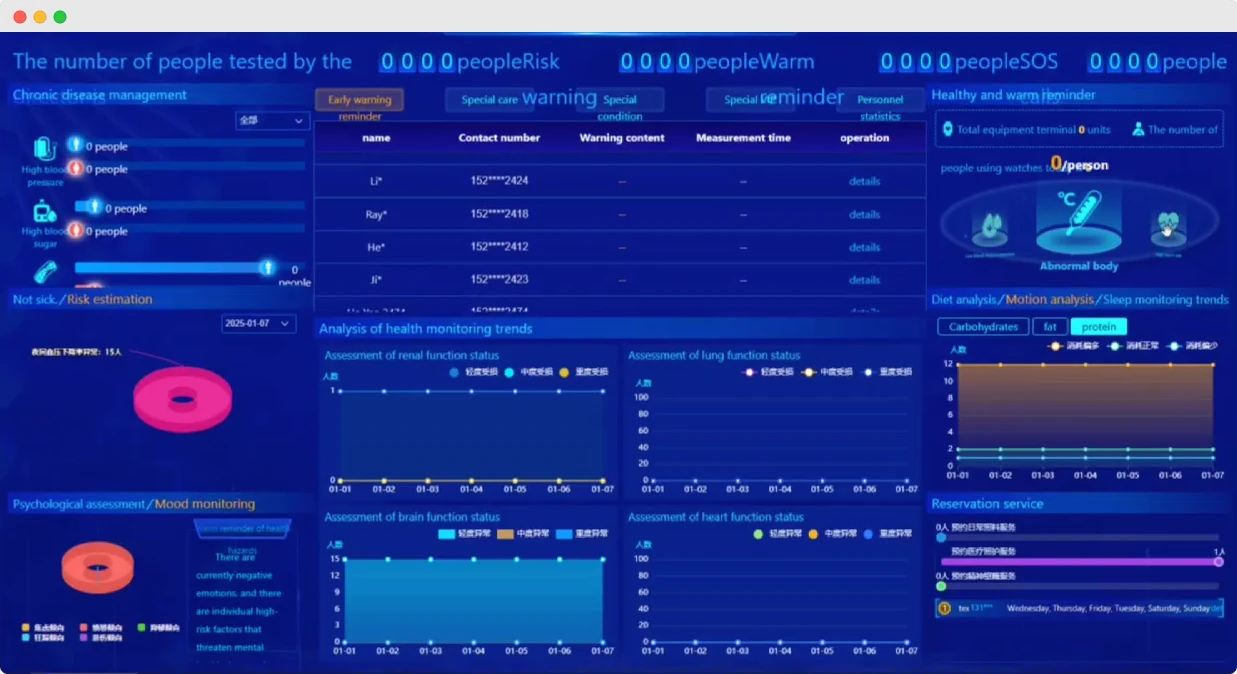
Health status information is stored in the user’s Digital Health Profile. The main screen of the platform displays summary reports and charts across different health monitoring categories. The charts show the percentage ratio of healthy employees and employees whose health parameters are outside the normal range. For all health metric measurements, the platform creates and stores a user’s Digital Health Twin.

AI PLATFORM FEATURES
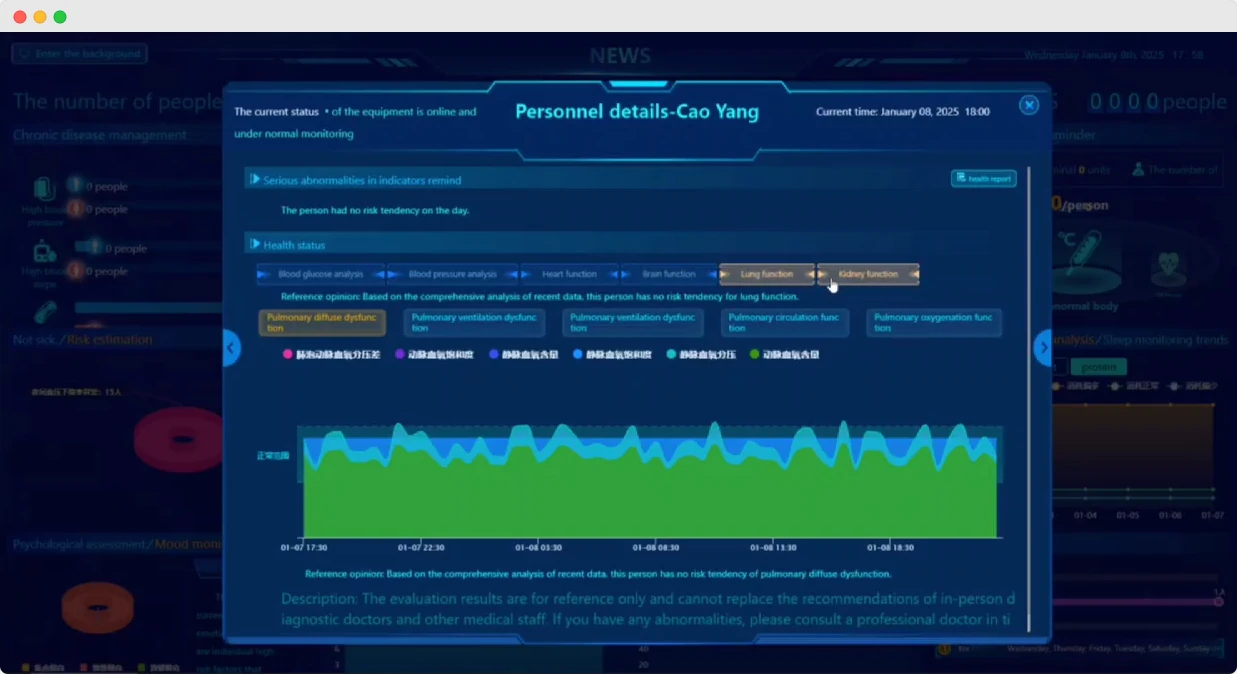
Monitoring of body systems and assessment of user health metrics.
Artificial intelligence measures 300+ parameters of users’ physical and mental health, assesses disease risks, and provides recommendations to improve well-being.
Brain function assessment
Cardiac function assessment
Lung function assessment
Kidney function assessment
Liver function assessment
Sleep monitoring analysis
Physical fatigue data
Emotional monitoring
Results of using the remote health monitoring platform.
AI-powered Accofrisk AI Watches serve as terminal devices connecting users to the platform.


GROUPS.
Health parameter alerts for connected users are divided into four risk groups:
Abnormality Reminders
Risk Alerts for Employees
Parameters Within Normal Range
High-Risk Alerts (SOS Alerts)

RESULTS OF USING THE PLATFORM.
Rapid response to patient conditions
Reduced health risks in the workplace
Improved workplace safety
Prevention of employee burnout
Remote medical check-ups
Automated decisions on fitness for duty
Health-informed team management
Employee health prevention
Employee care and well-being
Monitoring Categories and Use Cases.
What body systems, health parameters, and lifestyle aspects can the Accofrisk AI platform monitor remotely?
BRAIN HEALTH
CARDIAC HEALTH
LUNG FUNCTION
KIDNEY HEALTH
DIABETES MANAGEMENT
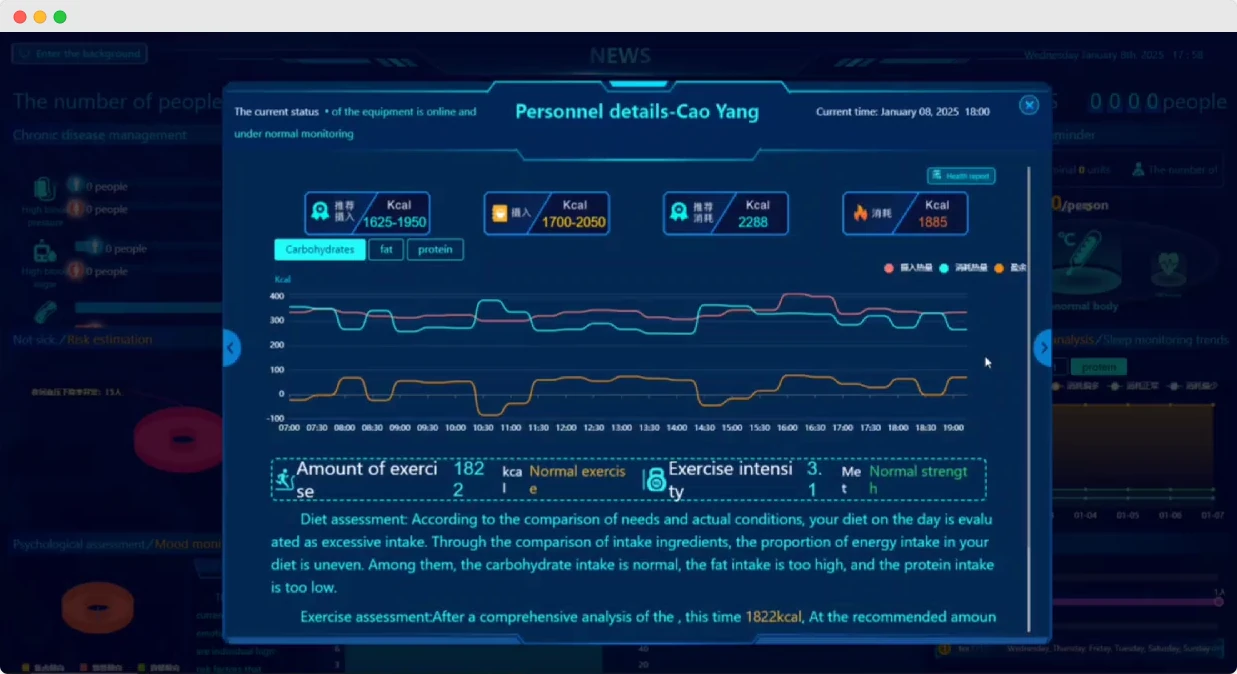
PHYSICAL ACTIVITY MONITORING
NUTRITION TRACKING
FATIGUE ASSESSMENT
EMOTIONAL HEALTH
STRESS MANAGEMENT
MENTAL HEALTH MONITORING
BLOOD GLUCOSE MONITORING
MICROCIRCULATION MONITORING
Example of monitoring depth – health metrics for the heart.
This example of health metrics shows the full depth of monitoring possible with ACCO devices. All parameters are available on the ACCO AI watches page.
BLOOD FLOW PARAMETERS
VEIN OXYGEN SATURATION (SVO2)
OXYGEN CONSUMPTION (VO2)
ARTERIAL OXYGEN TENSION (PAO2)
PULMONARY VASCULAR RESISTANCE (PVR
ARTERY BLOOD OXYGEN PRESSURE (OI)
ALVEOLAR VENTILATION (VA)
MICROCIRCULATION ASSESSMENT
MICROCIRCULATION HALF UPDATE RATE (MHR)
MICROCIRCULATION HALF UPDATE TIME (MRT)
SYSTEMIC BLOOD FLOW (QS)
MEAN RETENTION TIME OF MICROCIRCULATION (MST)
HEART FUNCTION METRICS
CORONARY PERFUSION PRESSURE (CCP)
RIGHT VENTRICULAR STROKE WORK (RVSW)
MYOCARDIAL PERFUSION (CMBV)
CARDIAC OUTPUT FORCE (CPO)
MYOCARDIAL BLOOD DEMAND (CMBN)
CARDIAC FUNCTION INDEX (CFI)
CARDIAC INDEX (CI)
LEFT VENTRICULAR STROKE WORK INDEX (LVWI)
MYOCARDIAL BLOOD SUPPLY AND CONSUMPTION RATE (CMBR)
ACCO devices, enabling access to the platform.
User access to the platform is provided through the company’s terminal devices. We can develop customized devices tailored to the needs of your clinic or organization.
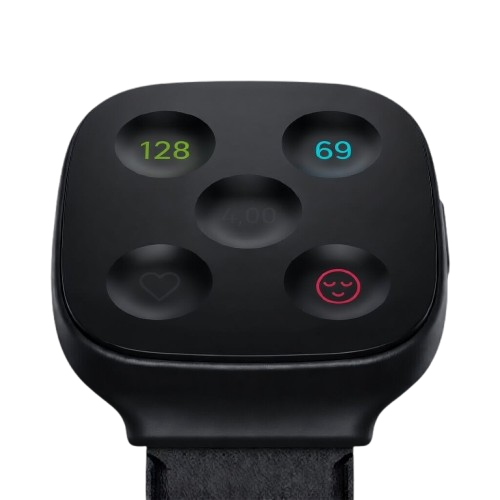
Ai Watch.

Ai Pocket.

Ai HEALTHPHONE.
Who the artificial Intelligence platform Is designed for.
The platform can be applied across a wide range of industries — from hospital patient health monitoring to overseeing the well-being of airline pilots.
FLEETS.
Driver health monitoring. Emergency situation management and data collection for remote medical check-ups.

CLINICS.
Continuous monitoring of patient health parameters, either in-hospital or remotely. Staff alerts.

SERVICES / HIGH-RISK STAFF.
High-risk employee health monitoring. Alerts and guidance for physically demanding and hazardous duties.

COMPANIES.
Front-office employee health monitoring. Stress and fatigue tracking to maintain workplace safety and well-being.

Accofrisk AI-powered health monitoring platform advantages.
Collecting the most comprehensive health data through unique AI-driven capabilities.
HEALTH.
Unlimited user connection for seamless health monitoring across all accounts.

24/7.
Continuous tracking of 300+ physical and mental health parameters in real time.

INTEGRATION.
API support for smooth integration with company or hospital information systems.

CUSTOMIZATION.
Development of system features tailored to company or hospital-specific needs.

FLEXIBILITY.
Access via cloud or deployed on client infrastructure for maximum convenience.

Industry solution for transport companies.
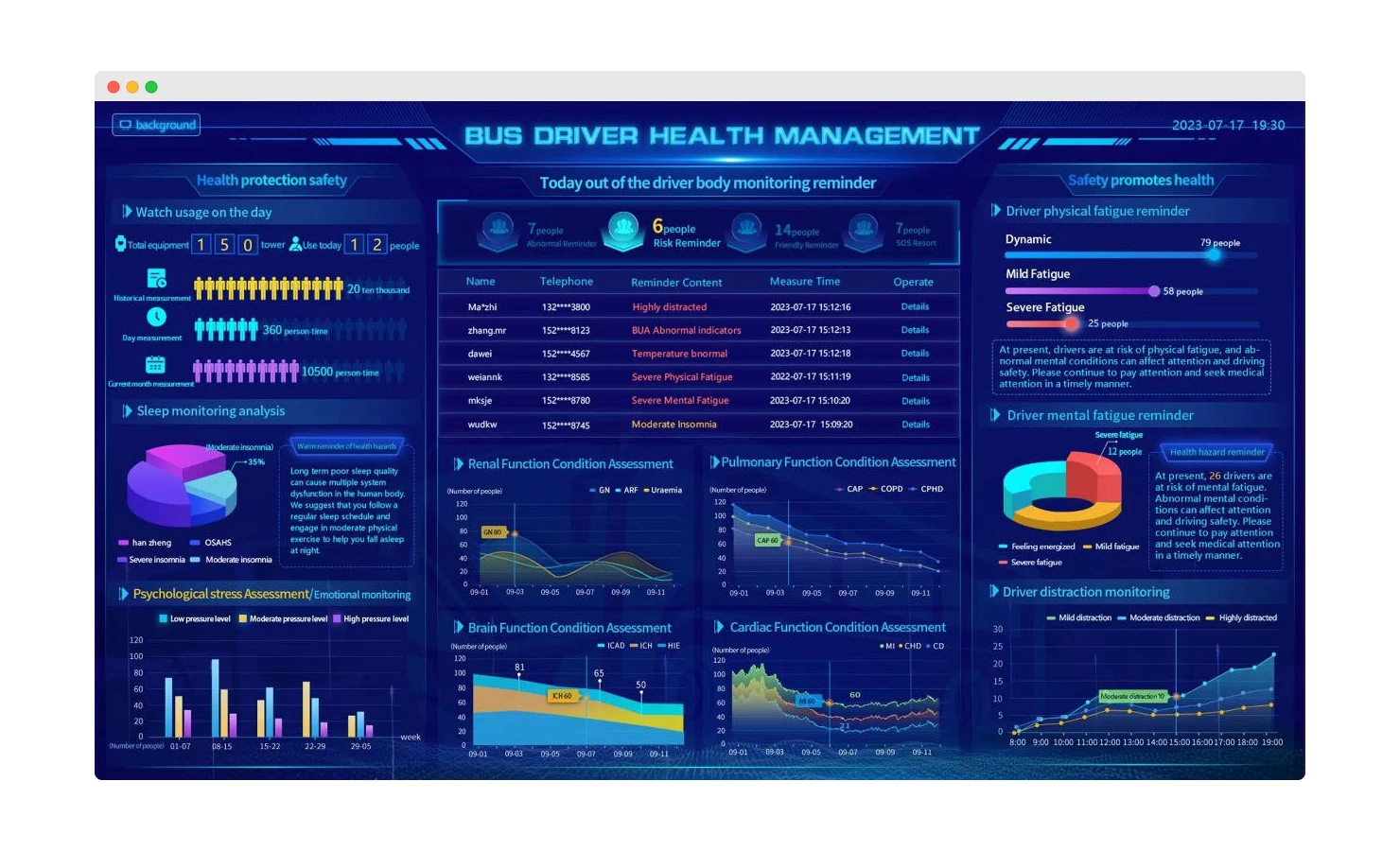
The driver health monitoring platform is designed to improve driving safety and employee well-being. Remote medical check-ups and automatic ignition system blocking ensure operational security.
TEAM CONTROL
Personal digital profile for each driver
Health analytics along the entire route
Reports on users and health parameters
Centralized team health control center
Remote medical check-ups for drivers
Alerts in critical or emergency situations
Monitoring alcohol and prohibited substance use
DURING DRIVING.
Voice interface for alerts and system control
Audible warnings in hazardous situations
Measurement of physical and mental health metrics
Driver posture monitoring for safety
Monitoring of driver attention and focus
Recommendations on nutrition, workload, sleep, and rest
TECHNOLOGY.
AI-powered watches as terminal devices
G-sensor, accelerometer & gyroscope
Browser or tablet-based operation
Data transmission via public 4G/5G networks
Built-in eSIM in the terminal device
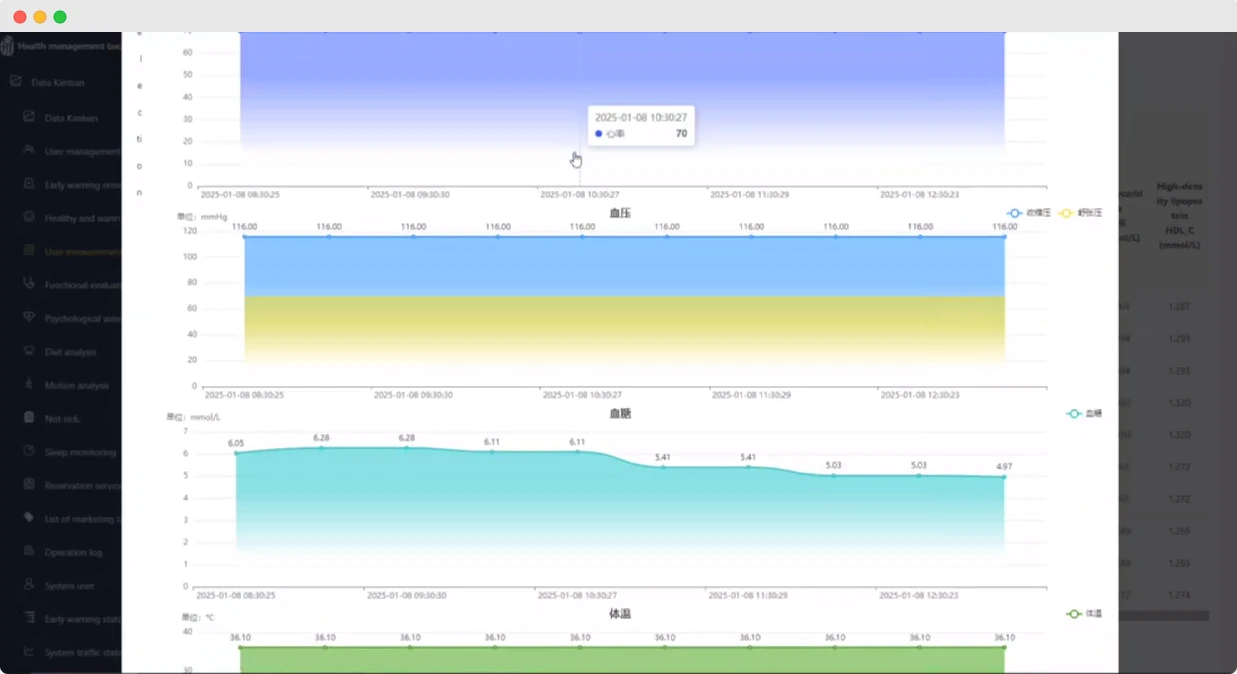
Health metrics measured and digital profile updated every 5 minutes
AI HEALTH PLATFORM FEATURES
Accofrisk AI Sports Team Monitoring System. Sports management with consideration of athletes’ health - Industry specific solution.

Accofrisk AI Sports Team Monitoring System is an industry-specific solution built on the Accofrisk AI health monitoring system, designed for professional sports teams, sports academies, federations, fitness organizations, and rehabilitation centers.
The platform operates through the Accofrisk AI Health Watch, an AI-powered wearable device that continuously collects physiological data every 5 minutes during training sessions, competitions, recovery periods, and daily activities.

All data is securely transmitted to a cloud-based infrastructure, where artificial intelligence analyzes more than 300 physiological, metabolic, cardiovascular, respiratory, recovery, sleep, nutrition, stress, and emotional health parameters.
Data and insights are available through web-based dashboards and tablet interfaces, enabling coaches, sports physicians, physiologists, rehabilitation specialists, and performance staff to monitor individual athletes or entire teams in real time.

The AI platform automatically generates personalized training, physical activity, nutrition, diet, and sleep plans for each athlete. It also analyzes stress levels and emotional well-being, helping identify excessive workload, fatigue, and potential burnout risks before they affect performance.

The platform helps teams:
Monitor training load and recovery
Reduce the risk of injuries and overtraining
Track athlete readiness for training and competition
Detect hidden physiological abnormalities
Personalize training, and nutrition programs
Manage stress and emotional well-being across the team
For every monitored parameter, the AI generates easy-to-understand results in the format:
Value → Assessment → Recommendation
This transforms complex physiological data into actionable insights that support faster and more informed decision-making.

Accofrisk AI Sports Team Monitoring Platform creates a unified digital ecosystem that combines wearable technology, cloud computing, sports science, and artificial intelligence to improve athletic performance, reduce health risks, optimize recovery, and support the long-term well-being of athletes.
Industries already using our AI platform.
We have completed hundreds of projects in companies that have taken employee, client, and patient health management to the next technological level. Managers in these organizations are already making decisions guided by the most important metric and value — the health of people.
FITNESS INDUSTRY
SHIPPING COMPANIES
MINING ENTERPRISES
TRANSPORT COMPANIES
EMERGENCY SERVICES
MARITIME TRANSPORT
AGRICULTURE
MANUFACTURING
PROFESSIONAL SPORTS
CONSTRUCTION COMPANIES
AVIATION
OIL INDUSTRY
GAS EXTRACTION
INSURANCE
Real data for high-quality medical model training and improved care.
Collaboration models with partners interested in high-quality real medical data for their research..


Accofrisk AI aggregates data on users’ physical and mental health, including sleep, activity, nutrition, and medication intake. This data helps create and train AI models using tools such as Hugging Face, Google Vertex AI, AWS SageMaker, Microsoft Azure ML, OpenAI Fine-Tuning, Grog, and can also integrate with medical platforms like Epic, Cerner, and IBM Watson Health. It enables the development of predictive disease models, time series analysis to identify patterns and early signs of health issues, generative models for the “digital twin” scenario — simulating how the body reacts to different loads, personalized lifestyle recommendations, and individualized reports for doctors and HR.
The system’s data can also be shared with research communities such as PhysioNet, MIMIC, the All of Us Research Program, OHDSI, and the Kaggle Medical Datasets Community to develop medical AI models, analyze clinical data, and conduct health research.

Unlike synthetic health data, which is generated algorithmically, Accofrisk AI data is based on real measurements and observations. This makes it particularly valuable for accurate AI model training, personalized recommendations, and predictive systems. While synthetic data is useful for model testing and privacy protection, it cannot fully replicate the natural variations and patterns of human health..

For secure data transfer, the platform uses APIs and RESTful services, standard formats (CSV, JSON, HL7/FHIR), encryption, access control, and anonymization, ensuring information is protected when shared.

Accofrisk AI can be integrated with a clinic’s electronic medical record (EMR) system to provide analytics on all connected users who have consented to their data being used for research. Comparing the clinic patients’ metrics with a broader dataset allows identification of anomalies and new patterns, supports disease risk prediction, and helps optimize patient monitoring and care programs.

Keep reading our blog


© 2026. All rights reserved.
COOKIE USE
By using our website, you consent to the processing of cookies and user data. If you do not want your data to be processed, please leave the site.